
Writing
Notes from the yard
Practical deep-dives on how ships are built, powered and secured — written from 14+ years on the shop floor, not from a desk.
- Electrical Engineering
- IT Infrastructure
- CNC & Automation
- AI & ML
- Industry 4.0 / 5.0
- Shipbuilding
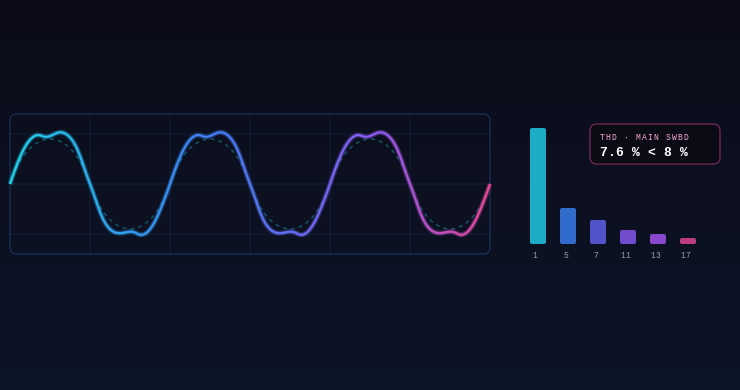
LATEST · ELECTRICAL ENGINEERING
Harmonics on Board: Why Variable Speed Drives Distort a Ship's Power and How to Control It
Variable speed drives made ships far more efficient — and filled their power systems with harmonics. On an island network with limited generator capacity, distorted voltage overheats machines, upsets electronics and can trip critical systems. Here is where harmonics come from, what class rules require, and the practical options for keeping a ship's power clean.
Monthly Read · No. 13 · 10 min read
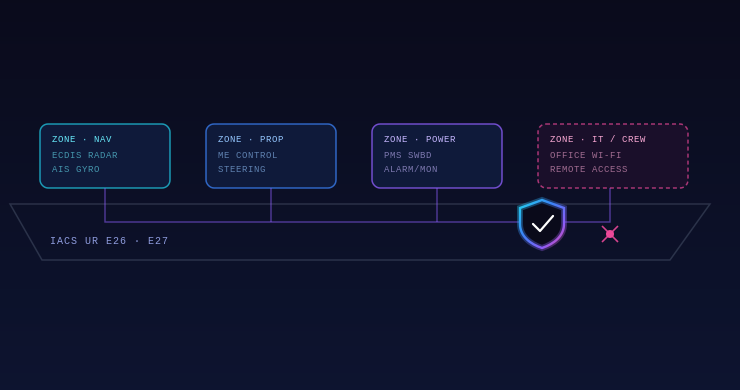
IT INFRASTRUCTURE
IACS UR E26 & E27 Explained: Cyber Resilience Is Now a Class Requirement for New Ships
Since July 2024, cyber resilience has been part of class rules for new ships, not just good advice. IACS Unified Requirements E26 and E27 make shipyards, equipment makers and owners responsible for securing the computer systems that steer, propel and power a vessel. What the rules require, who does what, and where projects run into trouble.
Monthly Read · No. 12 · 12 min
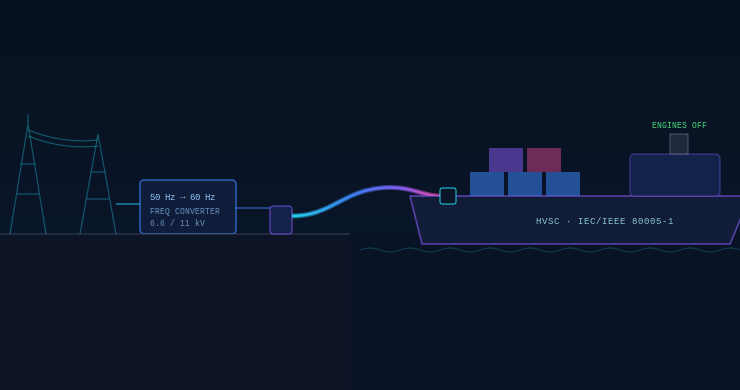
ELECTRICAL ENGINEERING
Shore Power for Ships: How High-Voltage Shore Connection (Cold Ironing) Works
A ship at berth still needs megawatts of power, and for most of its history that power came from diesel generators running alongside a city. Shore power replaces them with the grid. Here is how a high-voltage shore connection is engineered, why 50 Hz and 60 Hz is a real problem, and what the EU's 2030 shore power mandate means for ships and ports.
Monthly Read · No. 11 · 11 min
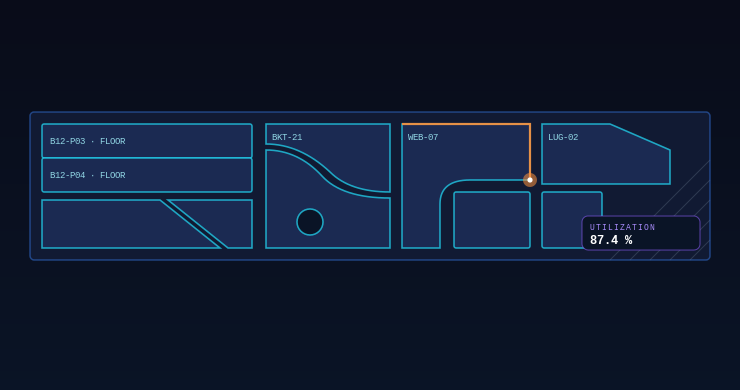
CNC & AUTOMATION
Steel Plate Nesting in Shipbuilding: How Smart Nesting Cuts Scrap, Cutting Time and Cost
Steel is one of the biggest material costs in a hull, and every plate either becomes parts or scrap. Nesting is where that is decided — long before the torch fires. A practical guide to how shipyard nesting really works, the techniques that lift plate utilization, and the trade-offs between scrap, cutting time and block schedules.
Monthly Read · No. 10 · 11 min
AI & ML
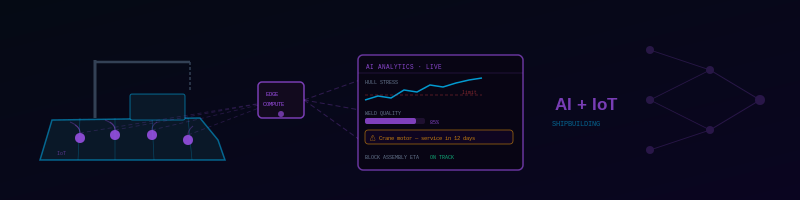
AI & IoT at Shipbuilding: How Smart Sensors and Machine Intelligence Are Transforming the Yard
Shipyards are deploying IoT sensor networks across cranes, CNC machines, welding lines, and hull blocks — feeding real-time data to AI systems that predict failures, monitor weld quality, and optimize block assembly timelines. This is a ground-level view of how AI and IoT are actually being integrated into the shipbuilding production floor.
Monthly Read · No. 9 · 13 min

INDUSTRY 4.0 / 5.0
From Industry 4.0 to Industry 5.0: The Evolution Reshaping Shipbuilding & Engineering
A deep-dive into the evolution from smart automation to human-centric manufacturing — and what the transition means practically for shipyards, CNC floors, and engineering teams managing both legacy machinery and modern ERP systems.
Monthly Read · No. 8 · 14 min
CNC & AUTOMATION
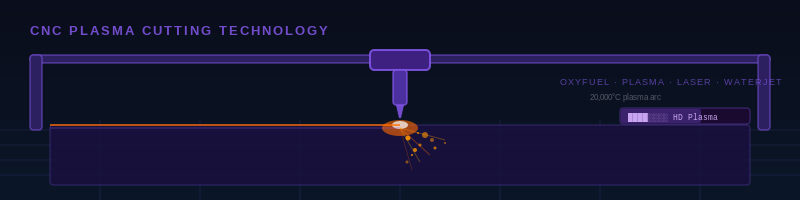
Steel Plate Cutting Technologies: Oxyfuel, Plasma, Laser, Waterjet & Beyond
A comprehensive guide to every major industrial plate-cutting method — how each process works at the physics level, the materials and thicknesses each handles best, and how to choose the right technology for your production floor.
Monthly Read · No. 7 · 11 min
IT INFRASTRUCTURE
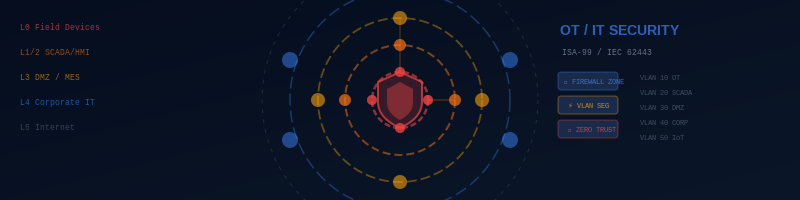
Securing Your Production Network: OT/IT Segmentation, VLANs & Industrial Cybersecurity
Production networks are among the most targeted and least protected infrastructure in industry. This guide covers the architecture, segmentation strategies, and configuration practices that secure an OT environment without crippling operational efficiency.
Monthly Read · No. 6 · 10 min
ELECTRICAL ENGINEERING
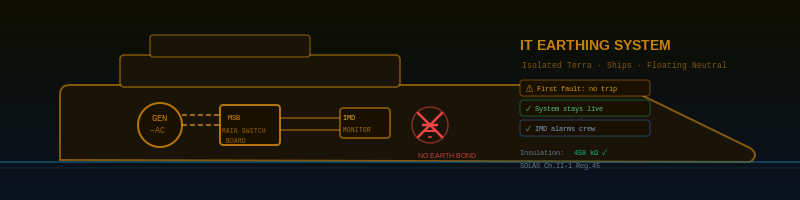
Why Ships Don't Use a Neutral Earth — The IT Earthing System Explained
Every electrician stepping onto a ship for the first time asks the same question: where is the neutral? The answer reveals one of the most important safety engineering decisions in maritime electrical design — and the physics behind why a floating earth protects lives.
Monthly Read · No. 5 · 9 min
SHIPBUILDING
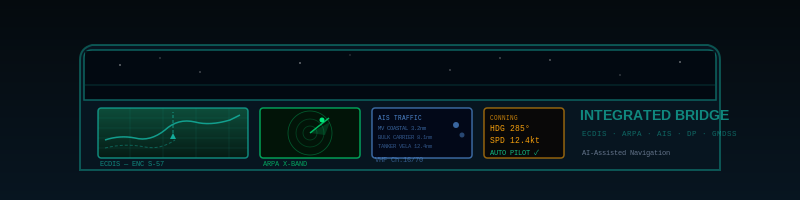
The Modern Wheelhouse: ECDIS, Integrated Bridge Systems & AI-Assisted Navigation
The ship's wheelhouse has transformed from a room of analog gauges and paper charts into a fully integrated digital command centre. This article walks through every major technology in the modern bridge — from ECDIS and dynamic positioning to AI collision avoidance and satellite communications.
Monthly Read · No. 4 · 12 min
INDUSTRY 4.0 / 5.0
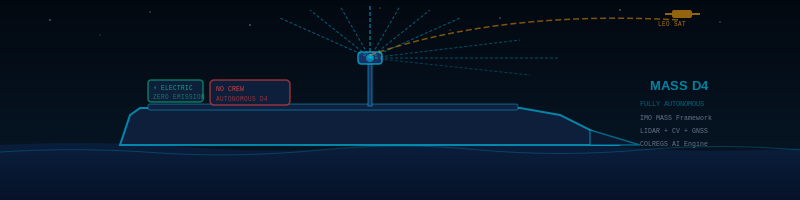
The Crewless Ship: Self-Driven, Self-Powered & Fully Autonomous Vessels
The autonomous ship is no longer science fiction. Vessels that navigate with little or no crew, run on clean power and talk directly to port systems are being trialled today. This covers the complete technology stack — propulsion, navigation AI, communication, and the regulatory path ahead.
Monthly Read · No. 3 · 13 min
SHIPBUILDING
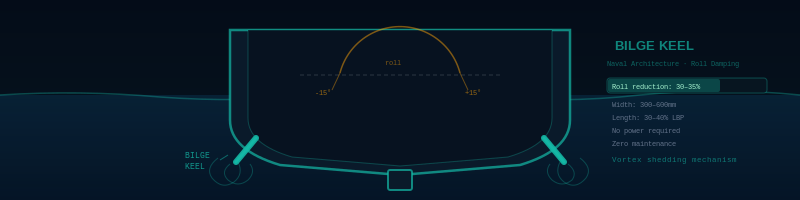
The Bilge Keel: The Simplest Device That Keeps a Ship from Rolling Over
Of all the stability devices on a ship, the bilge keel is the most elegant — a strip of steel with no moving parts and no power requirement that noticeably reduces rolling. Understanding how it works reveals fundamental principles of fluid dynamics and ship design.
Monthly Read · No. 2 · 8 min
AI & ML
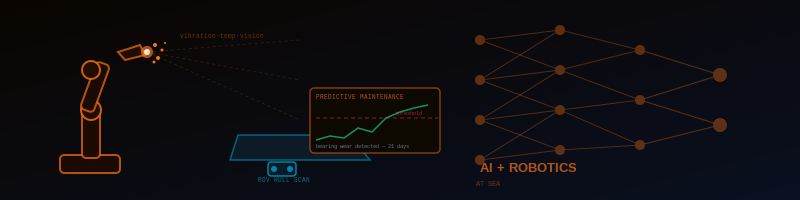
AI & Robotics at Sea: From Predictive Maintenance to Autonomous Inspection
AI and robotics are reaching every layer of maritime operations — from robots that inspect a hull while the ship stays afloat to engine-room analytics that spot wear before it becomes a failure. This maps where intelligent systems are actually working in shipping and shipbuilding today.
Monthly Read · No. 1 · 12 min